Post, like, share: politics in a digital world
27 August 2026

Digital connectivity and social media have transformed the way we communicate and access information, fundamentally changing the way in which members of parliament now engage with their constituents.
The Australian Bureau of Statistics' 2024 Time Use Survey found that one quarter of Australians spend time checking emails, social media and browsing online for an average of 1 hour and 23 minutes a day.
In today’s digital age, social media platforms have given politicians the chance to connect with voters directly.
Labor Member for Laverton in the Legislative Assembly, Sarah Connolly applauds social media’s ability to provide a personalised channel between herself and her constituents.
‘The wonderful thing is it enables me to speak to locals about the stuff that we have done. And I know that they’re listening and I know that they’re hearing me,’ she said.
Social media has allowed Connolly to bypass traditional media to get her message across.
‘People aren’t reading newspapers. They don’t watch the news. They’re not listening to the radio. They’re not interested in the press conference, they’re interested in the behind-the-scenes tour of a hospital,’ she said.
It also allows her to reach people outside of her electorate who otherwise may never have been aware of her work.
Connolly recalls an encounter she had at the gym, where a woman approached her to say she was a fan of the MP’s social media content.
‘She came up and she said, “oh my God, I follow you on social media”. She doesn’t live in my electorate and she said, “I’ve never actually followed or watched a politician but I feel like I’ve really learned things from you”.’
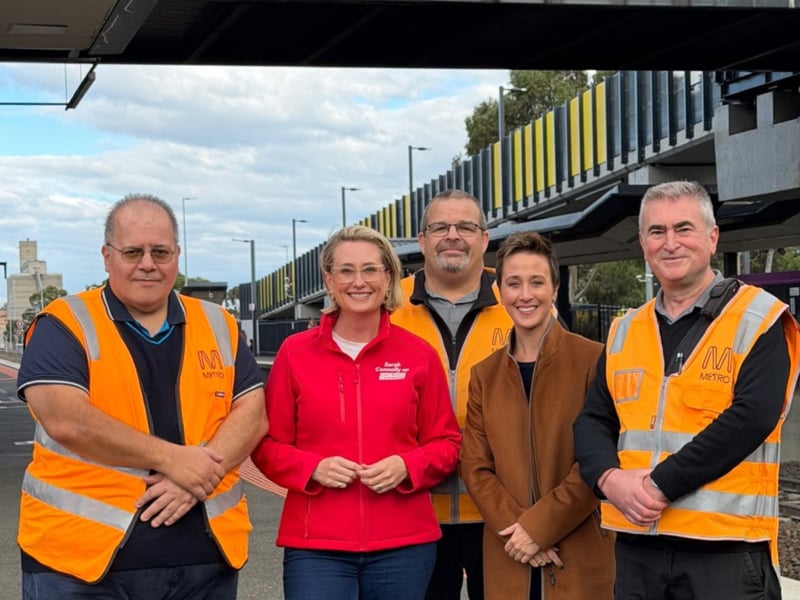
Connolly thinks her content works best when it is authentic.
‘It’s important that my voice is in there. It is my platform to tell my story and give Melbourne’s west an insight into who I am.’
Part of social media creation involves keeping up with current trends and ideas. Connolly recalls making a video about the Sunshine train station upgrades that referenced internet celebrity Clavicular.
‘The really great thing was it was taking a trend that was super popular - and super cringey - but tens of thousands of people viewed that and young people, they learned all about Sunshine station superhub.’
Connolly notes social media’s biggest drawback is the trolling she faces, but emphasises hate comments are often written from people outside her electorate, or even outside Victoria.
‘They don’t know the local roads, they don’t know the schools, they don’t know the challenges facing Melbourne’s west.’
For Legalise Cannabis MP David Ettershank, who represents the Western Metropolitan Region in the Legislative Council, social media works best to spread awareness of community campaigns, but it’s still just one of many avenues for communication with constituents.
‘My team and I tend to use social media in the context of specific campaigns rather than just maintaining a social media presence and churning content. We use it more as an organising tool,’ he said.
Ettershank has used his social media to mobilise his constituents against a proposed waste incinerator in Sunbury.
‘I want to work with the community. I want to empower the community. I’m a one-term parliamentarian. So for me, I didn’t expect to get elected so I’m more into campaigning and empowerment of people. Social media is one of the tools. But a day at the Sunbury Fair with a table is as important as getting a good post out,’ he said.
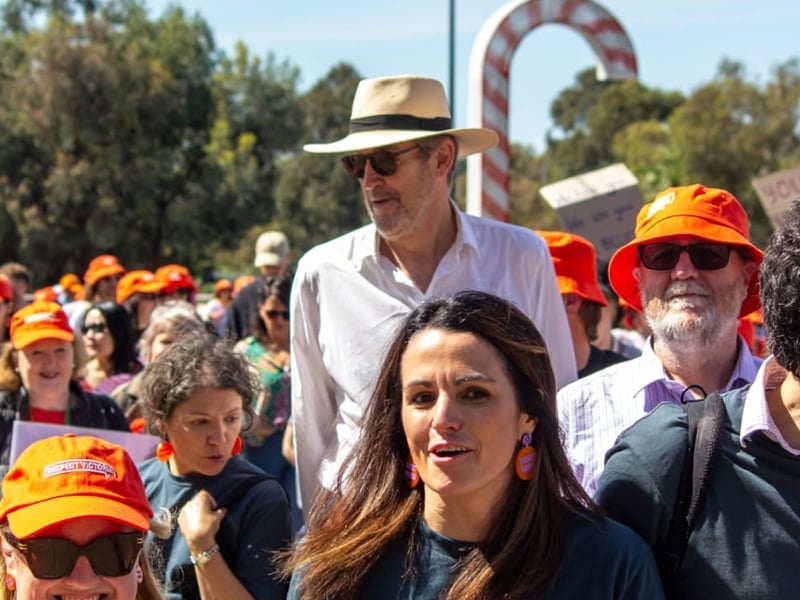
Social media has created an opportunity for the policy platforms of crossbench MPs to get the same level of attention as the major parties.
Ettershank recalls a Legalise Cannabis social media campaign that the Herald Sun reported on.
The campaign was calling for an amendment to the Equal Opportunity Act, aimed at outlawing workplace discrimination against workers taking prescribed medicinal cannabis. The campaign involved high-profile athletes, including basketballer Lauren Jackson and AFL coach Alastair Clarkson, making handheld videos about their use of medicinal cannabis.
‘The fact that these people who are really well-known sporting identities were relating to a Legalise Cannabis campaign sort of almost became the story,’ Ettershank said.
Other crossbench MPs like Georgie Purcell from the Animal Justice Party have formed strong brands on social media; Purcell has more than 230,000 followers on Instagram.
Ettershank thinks Purcell’s social media presence is impressive.
‘She’s a really good operator. She’s a really good example of someone who uses social media creatively. She has a defined brand. She’s across multiple platforms, she’s got a huge following, and I think her sincerity comes through.’
David Southwick has been the Liberal Member for Caulfield in the Legislative Assembly since 2010. When he first entered politics, ‘social media was kind of just really evolving then, but in the very early stages’.
‘What we would do when I first started is we would put something on all social media forms, and it would be the same message. So if I was talking about a law and order issue, then exactly the same video would be on Facebook and Instagram,’ he said.
Since then, Southwick has seen platforms splinter into different kinds of audiences, requiring more targeted messaging.
‘What people might want to see on Facebook might be different to what they want to see on TikTok. Because the audience has become a bit more specialised, it makes it that we’ve got to actually customise content more and be conscious of the audience that we’re talking to.’
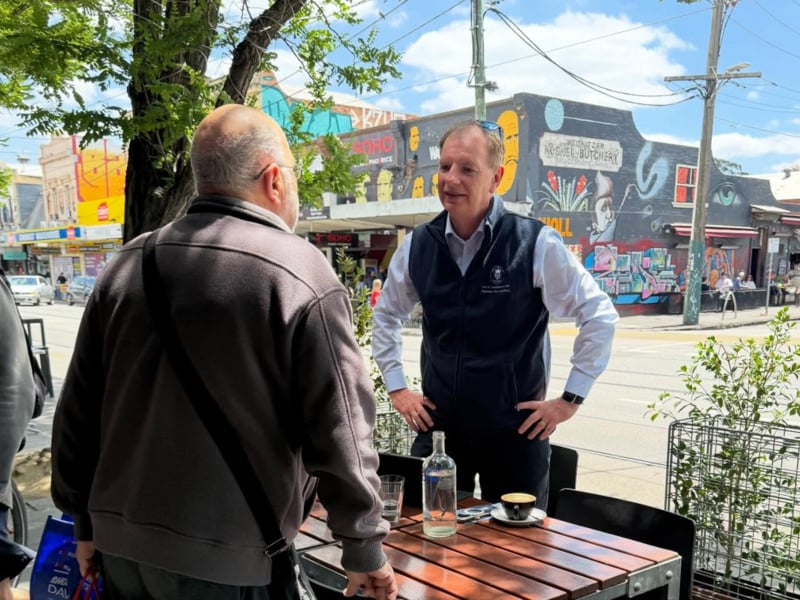
In the time Southwick’s been an MP, the presentation of members’ statements has also been changed by the dominance of social media. He recalls how in the early 2010s members’ statements would be read out very quickly. If the members’ statement was about a local community organisation, Southwick would send the organisation a printed copy of the Hansard transcript. Now, this can be done digitally.
‘Because it’s all now a video, you’ve got to try and perform. You’ve then got to clip up the video, and if you really want to, you clip up the video and put some other stuff in it, if you’re visiting the group, and then overlay that.’
Southwick also notes the importance of connecting with his actual constituents, rather than focusing too much on likes and comments from people who may be from other electorates.
‘I think it can be a trap for politicians and people where they get caught up in likes and engagement, instead of reach and who it’s reaching.
‘We might be attending a local event that might not necessarily get a load of engagement, but it’s getting into the reach of voters that I need to re-elect me.’
Like Sarah Connolly, Southwick finds social media content has reduced the need to rely on traditional media.
‘Social media has become an online press release. So rather than a newspaper or a radio station picking something up, we’re actually publishing, using social media to do that,’ he said.
‘So when we’re going to an event, it’s kind of what are we looking for? What do we want to share with viewers so they feel immersed in the experience and they feel part of our community?’
Connolly, Ettershank and Southwick all use social media in differing ways, but their shared use of this modern tool reflects the growing importance of digital platforms in political communication.
About the Author

Lucy Slevison
A participant in the Parliament Express program conducted by the Parliament of Victoria in partnership with Express Media. The program provided mentoring and engagement experiences, leading to a series of articles written by young Victorians for the Victorian Parliament's website.